Hello! We’re refreshing our website as you browse. If something feels off, just reach us at +91-8088313131 or experience@artflute.com.

Reach out to us on +91-8088-313131 or experience@artflute.com if you face any issues.

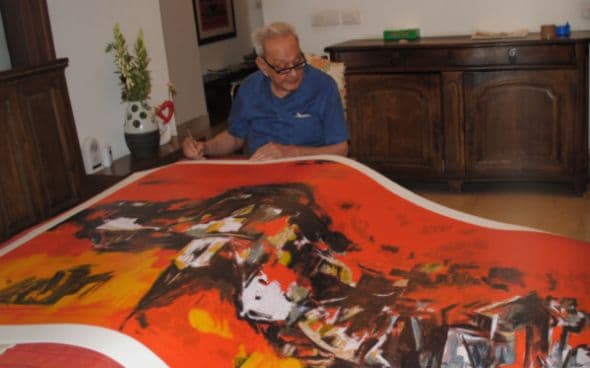
S H RazaS H Raza

S H Raza

Well, art is reality, art is a muse if it helps us to realise the truth. It is the major guiding element which helps you to realise the truth.

S H Raza

S H Raza

Contemporary Artist

Separator

About Artist

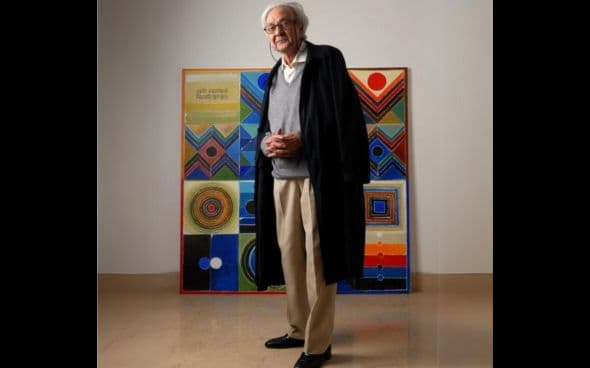
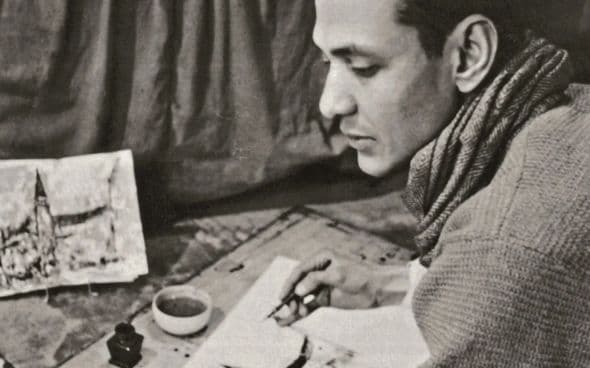
Sayed Haider Raza, a renowned 20th-century painter born in 1922 in Madhya Pradesh, India, found inspiration in his childhood memories of the dense forests and vibrant village life. As a founding member of the Progressive Artists Group, he embraced modern Indian art rooted in cultural heritage. Moving to France in 1950, he studied at École Nationale supérieure des Beaux-Arts, eventually settling in...
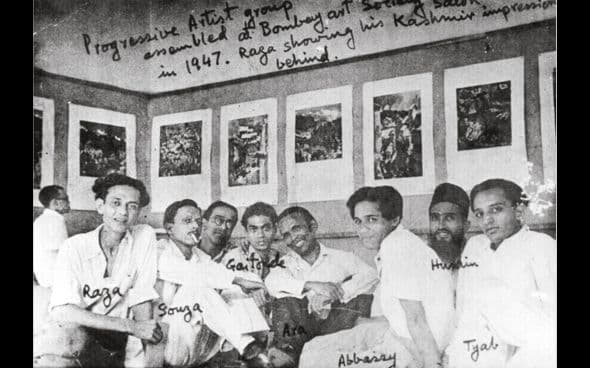
Sayed Haider Raza, a renowned 20th-century painter born in 1922 in Madhya Pradesh, India, found inspiration in his childhood memories of the dense forests and vibrant village life. As a founding member of the Progressive Artists Group, he embraced modern Indian art rooted in cultural heritage. Moving to France in 1950, he studied at École Nationale supérieure des Beaux-Arts, eventually settling in Paris. Raza's art, characterized by primary colors and abstract forms, explored cosmological concepts and geometric patterns.

His accolades included the Prix de la critique, Padma Shri, Lalit Kala Akademi Fellowship, Padma Bhushan, Padma Vibhushan, and Commandeur de la Legion d'honneur. Raza established the Raza Foundation to promote Indian art and culture, supporting emerging artists and organizing exhibitions. Despite his wife's passing, he continued painting passionately until he died in 2016. The Centre Pompidou hosted a retrospective exhibition of Raza's works, titled "Raza: The Fullness of Abstraction," showcasing his renowned pieces alongside photographs and documents, marking a significant showcase of his life's work in France.
Explore Raza's journey with 10 of his iconic works
and browse through the works of other master artists like M. F Husain, Thota Vaikuntam and Jehangir Sabavala.
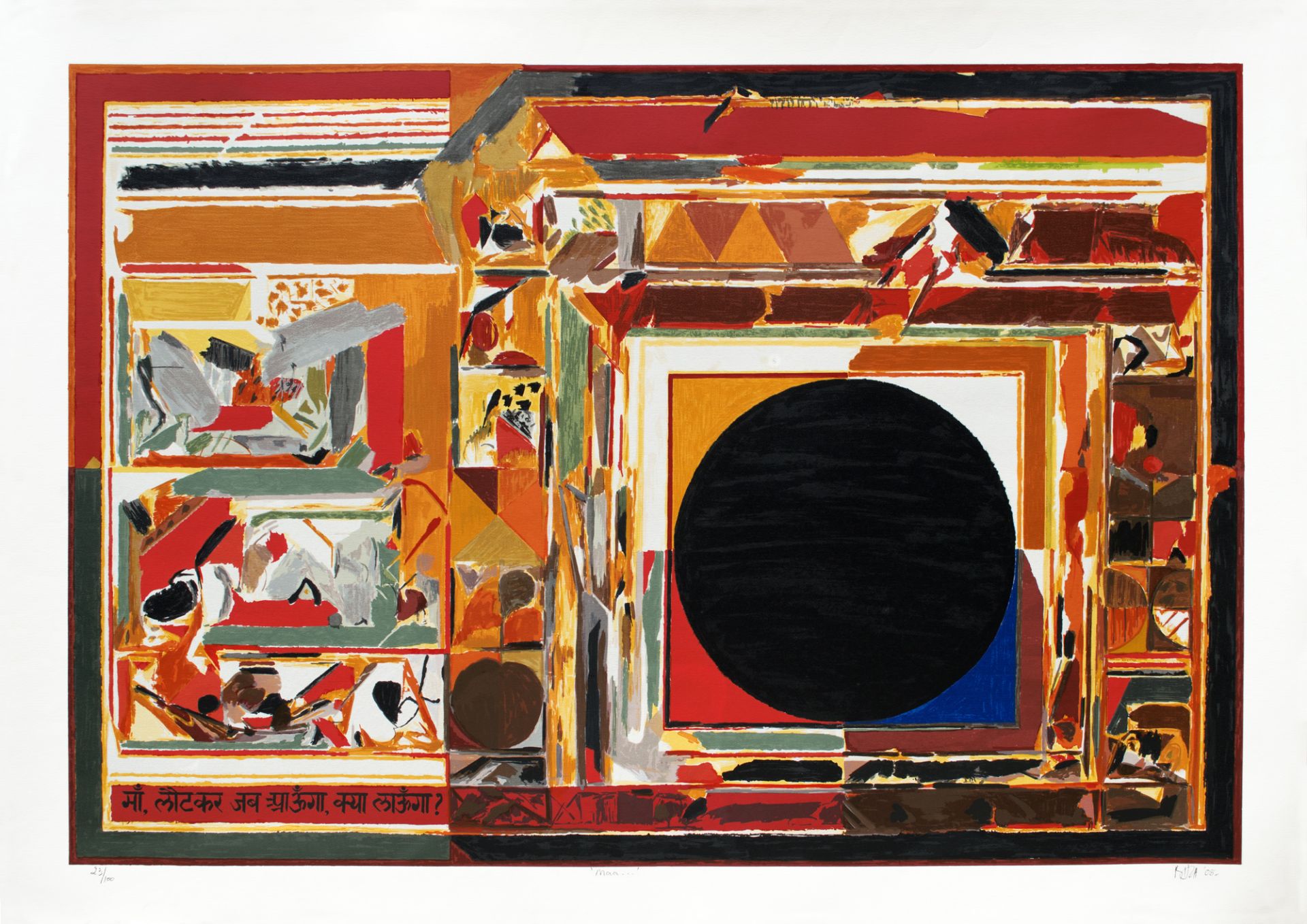
Fire by S H Raza

Fire

S H Raza

Serigraph on Paper 300 GSM

30 (w) x 40 (h) in

$ 1,369

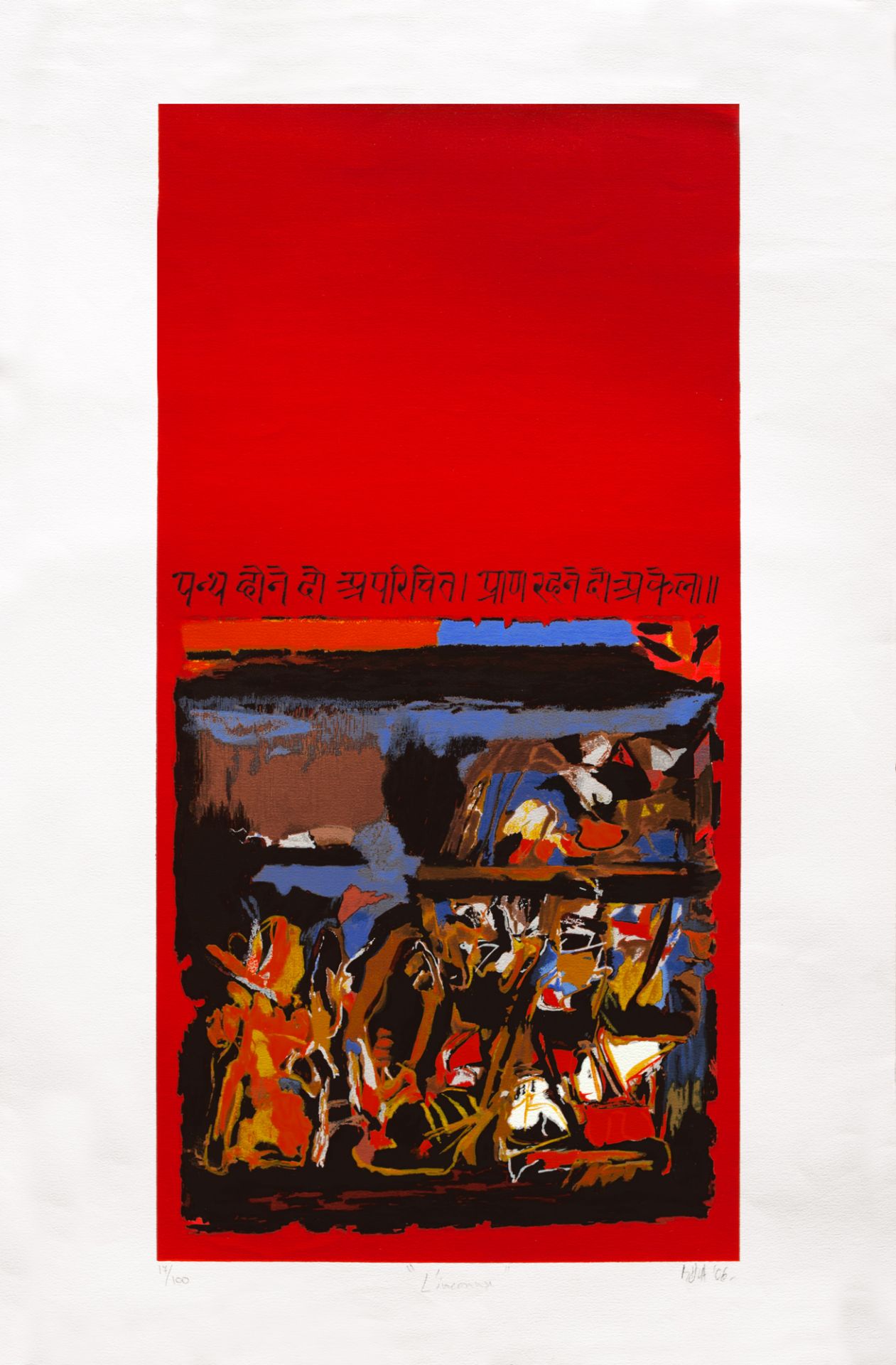
Immanence by S H Raza

Immanence

S H Raza

Serigraph on Paper 300 GSM

26 (w) x 40 (h) in

$ 1,369

Trishna by S H Raza

Trishna

S H Raza

Serigraph on Paper 300 GSM

40 (w) x 40 (h) in

$ 1,905

Kriti Prakriti by S H Raza

Kriti Prakriti

S H Raza

Serigraph on Paper 300 GSM

40 (w) x 40 (h) in

$ 1,905

Rajasthan by S H Raza

Rajasthan

S H Raza

Serigraph on Paper 300 GSM

40 (w) x 40 (h) in

$ 2,202

Asto Maa by S H Raza

Asto Maa

S H Raza

Serigraph on Paper 300 GSM

30 (w) x 40 (h) in

$ 1,429

Earth by  S. H. Raza by S H Raza

Earth by S. H. Raza

S H Raza

Serigraph on Paper 300 GSM

30 (w) x 40 (h) in

$ 1,369

Shanti Bindu by S H Raza

Shanti Bindu

S H Raza

Serigraph on Paper 300 GSM

31 (w) x 40 (h) in

$ 1,786

Bharat Bhoomi by S H Raza

Bharat Bhoomi

S H Raza

Serigraph on Paper 300 GSM

40 (w) x 40 (h) in

$ 1,905

Bindu and Earth by S H Raza

Bindu and Earth

S H Raza

Serigraph on Paper 300 GSM

26 (w) x 40 (h) in

$ 1,548

Upshanti by S H Raza

Upshanti

S H Raza

Serigraph on Paper 300 GSM

26 (w) x 40 (h) in

$ 1,369

Untitled-2 by S.H Raza by S H Raza

Untitled-2 by S.H Raza

S H Raza

Serigraph on Paper 300 GSM

15 (w) x 40 (h) in

$ 952

Untitled-1 by S.H Raza by S H Raza

Untitled-1 by S.H Raza

S H Raza

Serigraph on Paper 300 GSM

15 (w) x 40 (h) in

$ 952

The Village by S. H. Raza by S H Raza

The Village by S. H. Raza

S H Raza

Serigraph on Paper 300 GSM

84 (w) x 60 (h) in

$ 4,464

Saurashtra by S H Raza

Saurashtra

S H Raza

Serigraph on Paper 300 GSM

60 (w) x 60 (h) in

$ 3,627

The Bindu and Beyond

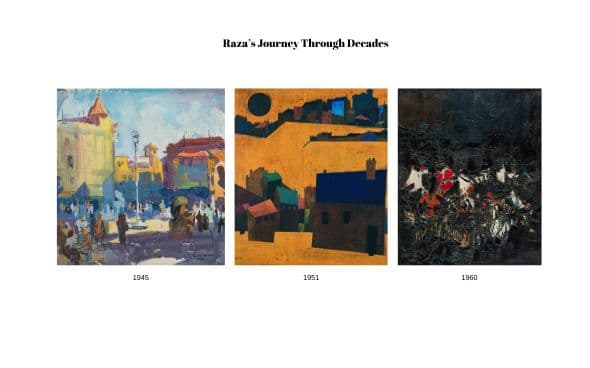
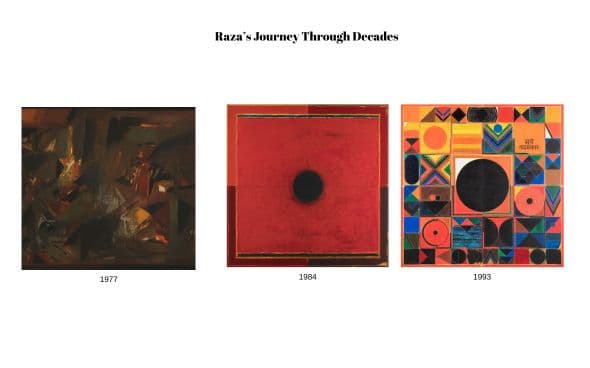
Sayed Haider Raza’s artistic journey spanned from rural India to global recognition. A founding member of the Progressive Artists' Group (PAG), Raza pushed boundaries, blending Indian traditions with modernist ideas. His style evolved from Cubism in the 1950s to expressive abstraction in the 1960s, culminating in the iconic "bindu" in the 1970s, symbolizing the core of creation. Throughout his career, Raza sought to connect deeply with nature, spirituality, and his Indian roots. He also embraced serigraphy, making his art accessible to a wider audience, ensuring his legacy reached beyond galleries.

Roots in Abstraction

Roots in Abstraction

Sayed Haider Raza wasn't your typical artist. This Indian modernist took the road less taken from what was dominant back in his days - figurative art - opting instead to make a move towards abstraction as his career progressed. His canvases burst into geometric abstract shapes and colours, inspired by his homeland's rich spiritual and philosophical traditions, particularly Tantric tradition that employed art as a device to catalyze the transformation of consciousness. Raza started with landscapes and cityscapes, but his true passion was exploring the connection between nature, the universe, and our inner selves. He used the "bindu," a simple dot symbolizing the core of creation, as a recurring motif. Inspired by his childhood surrounded by Indian forests, his art blended the influences of Rajasthani and Pahari miniature paintings, poetry, and meditation practices. Even living mostly in Paris, Raza's Indian roots shone brightly through his masterful use of colour.

Famous Paintings of SH Raza

1) The Bindu Series: The Center of Creation

The Bindu (Sanskrit for "point") didn't just appear in Raza's work — it arrived like a memory resurfacing. In 1980, this tiny dot became the centre of his visual philosophy. The idea traces back to a quiet classroom in rural Madhya Pradesh where a school teacher, trying to calm an unfocused young Sayed Haider Raza, drew a single dot on a blackboard and asked him to look at it. A simple act, but one that lodged itself somewhere deep in him.

By the 1970s, after years of living in France and wrestling with Western abstraction, Raza felt something was missing. He returned to India — not permanently, but spiritually — through journeys to Ajanta-Ellora, Varanasi, Gujarat, Rajasthan. Light, earth pigments, chants, stone carvings… all of it stirred something. The Bindu emerged as his way of speaking about energy, silence, time, the impossible-to-name forces that shape our lives. And perhaps that is why these famous paintings of SH Raza continue to enthrall collectors: the simplicity is deceptive; the experience is anything but.

Key Works: Bindu (1980), Bindu Panchtatva, Bindu Chetna, and La Terre (1977) are among sayed haider raza's famous paintings.

2) The Germination Series (1984–2012)

The Germination Series feels like a quieter conversation — geometric, yes, but also intimate, almost like watching an idea take root. Raza uses the Tribhuj (triangle) almost like a character. Inverted, it becomes prakriti (the feminine force). Upright, it stands for purusha (the masculine). Many collectors say the abstract SH Raza paintings from this period feel "alive," and you can see why. They hold the tension between stillness and growth, between the known and the just-forming. There's something deeply human about them, almost like watching a thought evolve on paper.

3) Cosmic Explorations

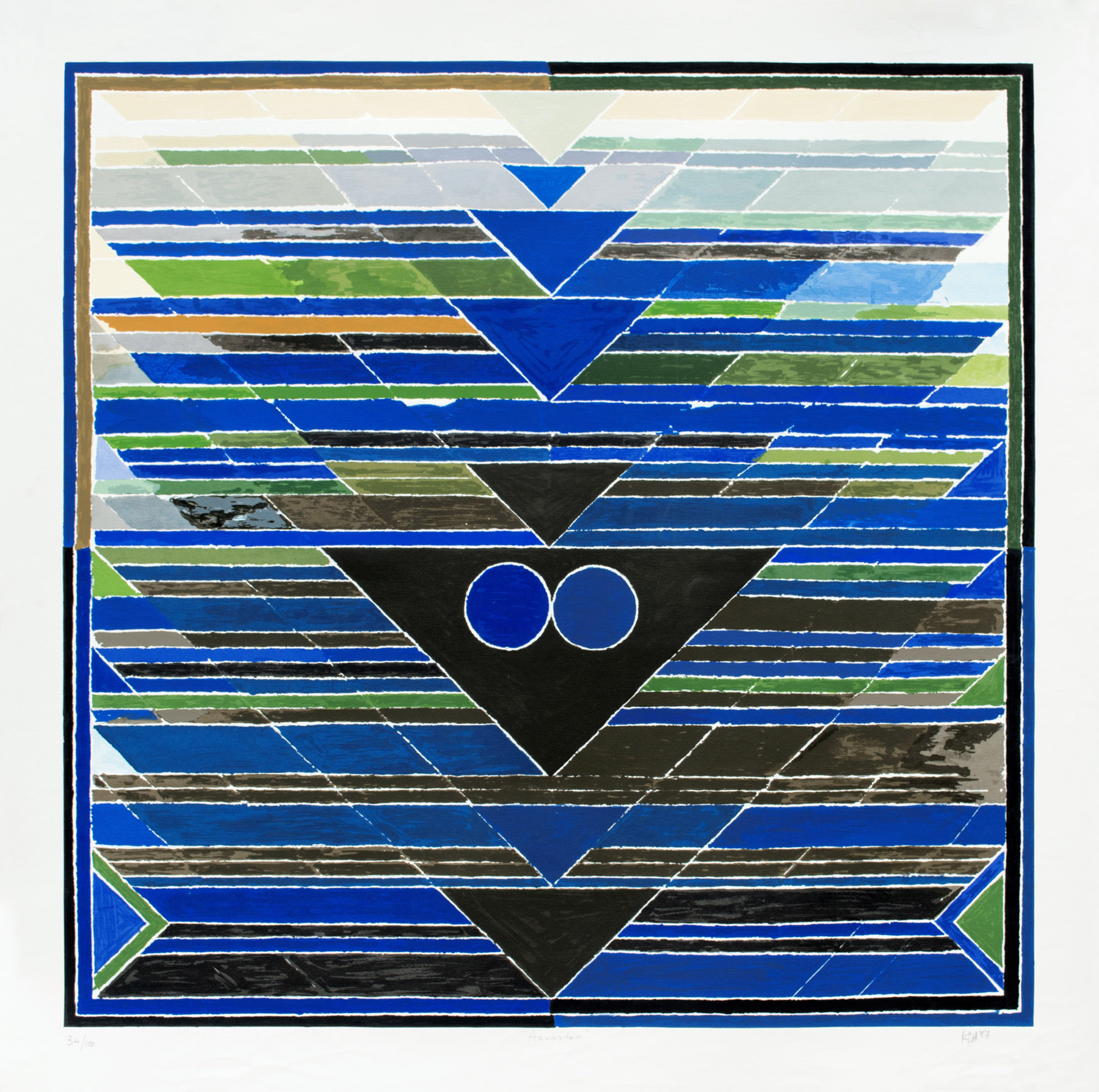
After 2000, Raza's canvases seem to open outward. The references grow bolder — Mahabharata, Kundalini, Naga iconography — yet the treatment feels more distilled. "Surya and Naga" pairs yellow and blue Bindus in a way that somehow feels both ancient and modern. The Panchatatva Series channels the five elements using his unmistakable palette: black, red, blue, yellow, white. These later paintings of Sayed Haider Raza are the works of an artist who no longer needs to explain himself. They carry a sense of arrival, of a journey completed yet still unfolding.

Price of SH Raza's Paintings

Understanding sh raza paintings price means looking beyond numbers and into context — size, era, medium, and rarity all influence valuation, but emotion and demand often play their part too.

1) Auction Records and Market Performance

Sayed Haider Raza's auction history reads like a series of milestones in Indian modernism. "Saurashtra" (1983) soared to ₹16.42 crore ($3.49 million) at Christie's in 2010. "Tapovan" reached $4.45 million in New York in 2018. These are not just market victories; they're markers of how deeply Sayed Haider Raza's famous paintings resonate across continents and collecting cultures.

2) Price Brackets

Original Paintings:
Large abstract compositions (60" x 60"+): ₹8–40 crore ($1–5 million)
Mid-size Bindu works (36" x 36"): ₹1.6–4 crore ($200,000–$500,000)

Serigraphs:
Large-format (40" x 74"): ₹1.2–4 lakh ($1,500–$5,000)
Standard sizes (20" x 20" to 40" x 40"): ₹50,000–3.25 lakh ($650–$4,200)
Edition sizes: 50–125 prints, each hand-signed

The affordable price with the authentication from Raza makes serigraphs the best way to buy SH Raza paintings without spending on Originals which remains out of reach of a lot of collectors.

How to Choose the Right SH Raza Artwork

For collectors keen on spirituality, understanding how SH raza the artist approached sacred geometry can transform the way you experience his work — it's less about analysis and more about tuning into his visual rhythm.

1) Understand His Symbolism

The Bindu as Universal Point: Choosing a Bindu painting by Raza is like choosing a moment of stillness. Raza often described it as "the centre of my life." In the right setting — a study, an office, a meditation space — it becomes a quiet anchor, almost like a breathing point in the room.

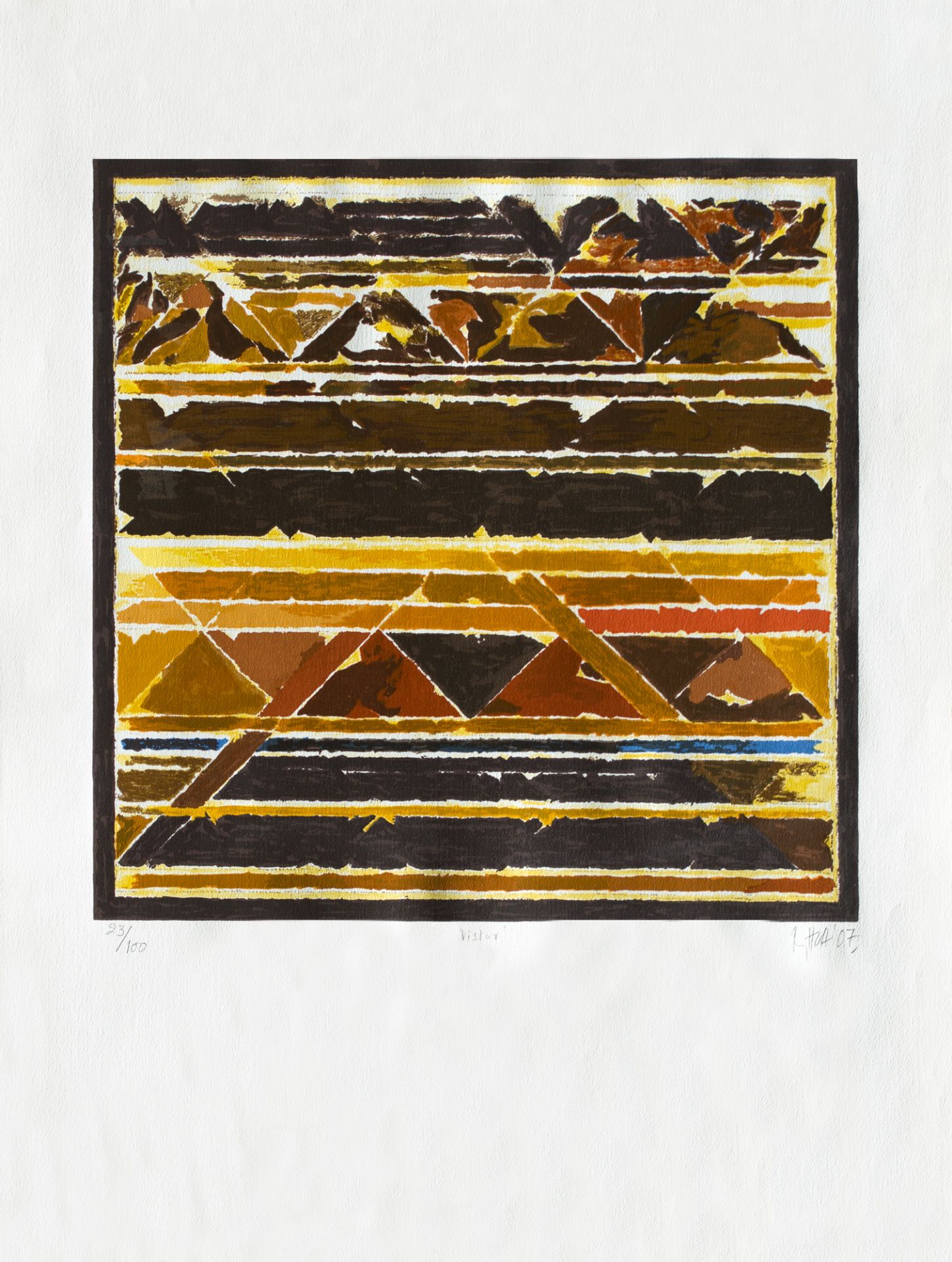
Geometric Sacred Language: Triangles, circles, squares — Raza uses them the way poets use pauses. The Tribhuj holds layers of meaning, from gendered energies to cosmic dualities. Understanding even a fraction of this deepens your appreciation of Sayed Haider Raza art.

The Panchatatva (Five Elements): Black, red, blue, yellow, white. Each tied to Bhoomi, Vayu, Jal, Agni, Akasha. Even without knowing the symbolism, you feel the balance.

The yantra-based geometry central to SH Raza's art reflects ancient philosophies translated into contemporary abstraction.

2) Placement and Size

Scale Options:
Large-format artist SH Raza's paintings can completely redirect the energy of a room — they suit boardrooms, galleries, open-plan homes.
Medium Format (36" x 36" to 40" x 40"): Perfect for personal offices or rooms where you want a focal point without overwhelming the space.
Standard small Format (20" x 20" to 30" x 30"): Great for corridors, quiet corners, or compact interiors.

Modern Interior Integration: Raza's work loves clean lines and open space. Minimalist rooms seem to echo his geometry, while neutral palettes let his colours breathe. The effect is subtle but transformative — collectors often describe it as a "shift in the room's mood."

3) Personal Preference

One of the pleasures of living with Raza's work is that it evolves with you. Some pieces feel like a burst of energy; others invite long, almost meditative looking. Let your instinct guide you. Ask what draws your eye first — the colour? the symbol? the centre? These small cues often tell you more than any formal analysis.

4) Budget

Serigraphs offer a thoughtful starting point for collectors. They sit at 3–5% of the price of original paintings, yet retain value through limited editions. For collectors exploring SH Raza paintings for sale, they offer a blend of accessibility and long-term collectability — especially for those who want to grow into the world of Raza gradually.

Authenticity & Certification Process

At ArtFlute, every S.H. Raza serigraph is handled with the same care collectors offer their artworks.

1) Hand-Signed Authentication

Each piece carries Raza's pencil signature — a detail many collectors treasure.

2) Edition Numbering

Hand-written numbers (for example, "26/60") sit on the lower left, marking your place in the edition.

3) Certificate of Authenticity

Each acquisition comes with COA documentation listing title, year, medium, edition size, provenance.

4) Red Flags

Printed signatures, missing paperwork, suspiciously low prices — these deserve caution, especially in online markets.

If you're keen on more original contemporary Art or Indian art online browse our larger collection.

FAQs About SH Raza Paintings

1. What is SH Raza famous for?

Sayed Haider Raza (1922–2016) is remembered as a founding force behind the Bombay Progressive Artists' Group and the creator of the Bindu — a symbol that became synonymous with him. His work blends Indian spirituality with Western modernism, earning him honours like the Prix de la Critique (1956), Padma Shri (1981), Padma Bhushan (2007), Padma Vibhushan (2013), and the Commandeur de la Légion d'honneur (2015).

2. How much does a SH Raza painting cost?

Original paintings: ₹8–40 crore for major canvases; ₹1.6–4 crore for mid-size.
Serigraphs: ₹50,000–₹4 lakh depending on size, edition, and condition.

3. What inspired S.H. Raza's art style?

Childhood memories of Madhya Pradesh forests, the Progressive Artists' Group's modernist mission, French artistic influences, and a profound rediscovery of Indian philosophy all shaped him. By the time the Bindu arrived, it felt like the culmination of decades of searching.

4. Are S.H. Raza's paintings suitable for modern interiors?

Absolutely. Modern, minimalist spaces seem to echo his forms. Large works create presence; smaller ones create moments of pause. SH Raza paintings are highly sought in corporate offices and private homes alike. They lend both intellectual depth and visual calm.

5. What are Raza's paintings based on?

Hindu Cosmology, Tantric geometry, the five elements, the interplay of feminine and masculine energies, childhood memories, and Raza's lifelong belief that colour can be a spiritual tool. Each Syed Haider Raza painting carries its own blend of these influences, making his work endlessly compelling to collectors and admirers.

WhatsApp